The Design Context
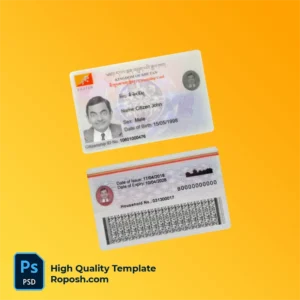
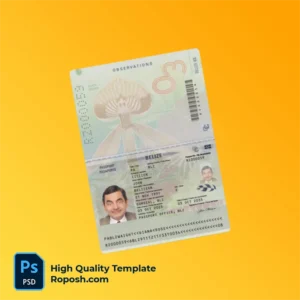
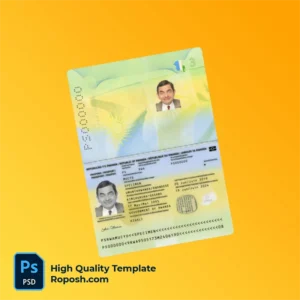
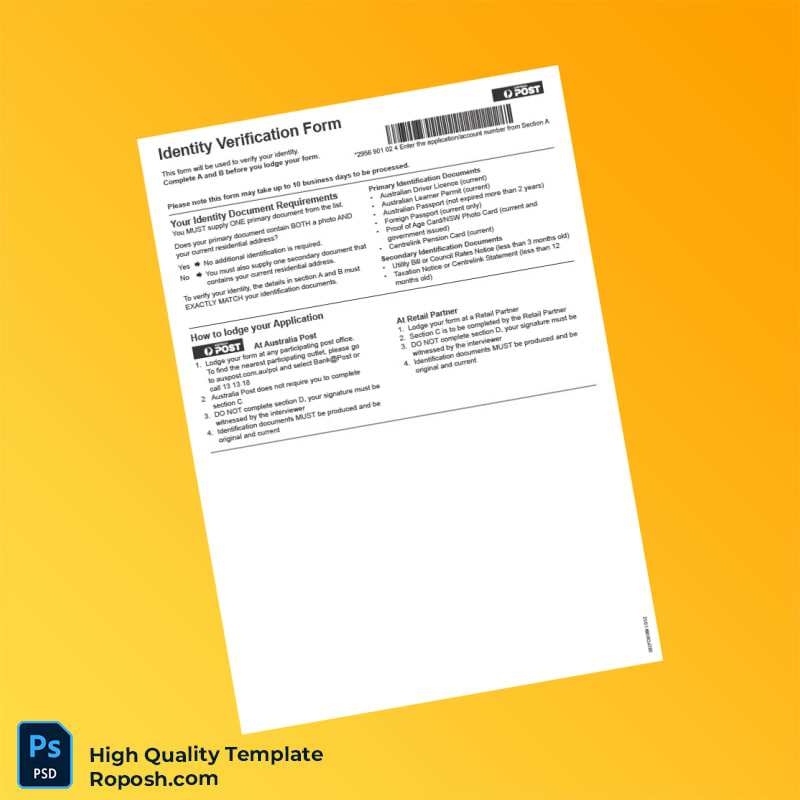
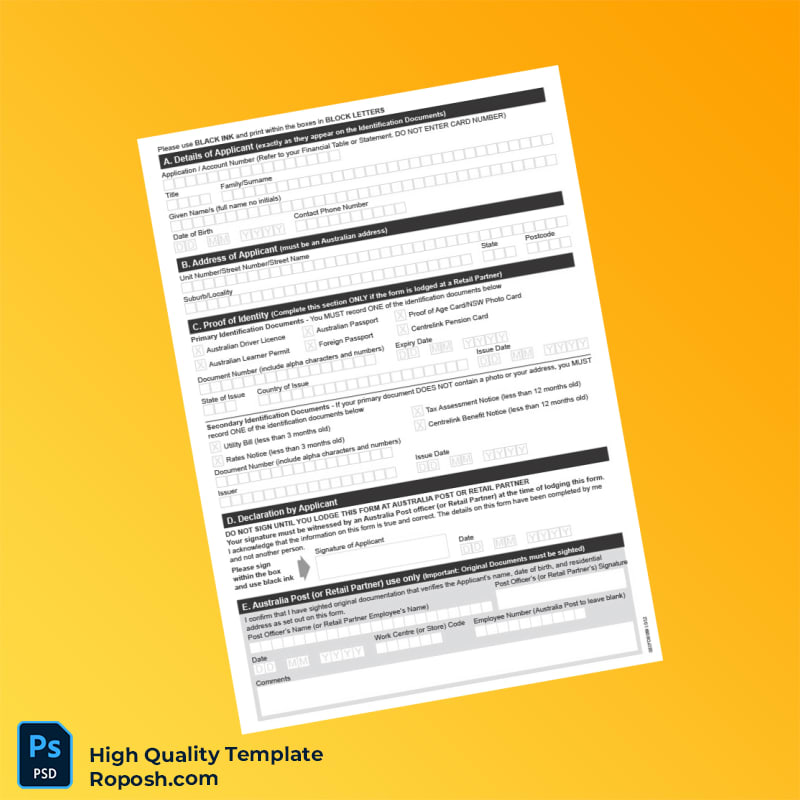
In the realm of professional graphic design, access to high-fidelity identity verification templates is essential. Whether showcasing design portfolios, preparing educational projects, or developing mockups, quality and accuracy are paramount. Designers often encounter the challenge of sourcing pixel-perfect layouts that maintain fidelity both on screen and in print. Poorly crafted templates with blurry text borders or inconsistent layouts can compromise the credibility of design presentations. This Australia Editable Identity Verification Template addresses these pain points by offering a meticulously crafted, two-page set in both Word and PDF formats. It provides a foundation that supports precision and clarity, enabling designers and print specialists to produce expert-level results.
Addressing Layout & Font Challenges
One of the common obstacles when working with editable identity templates lies in font mismatches and poorly arranged layers, which often lead to blurred edges or skewed text placement. This template resolves these issues through careful font selection that reflects exact matching standards consistent with typical identity documentation fonts, guaranteeing vector-sharp text borders. The design features a clean layer hierarchy, organized by functional groups such as background elements, text fields, barcode details, and photo placeholders. Such systematic layering ensures easy navigation and modification without risking layout corruption. To deepen your understanding of optimized design assets and font handling, review our guide on OCR-friendly Design.
Technical Specifications Deep Dive
This template is meticulously crafted to meet printing and design precision standards. It supports an output resolution at 600 DPI, ensuring sharp and clear reproduction of all text and graphic elements in print. The color mode is set to CMYK, ideal for print devices, delivering accurate color representation and consistency across various printers. The inclusion of Smart Object layers allows for non-destructive editing of image placeholders, enhancing workflow efficiency when swapping photos or logos. Vector shape layers are extensively used to retain crisp outlines and scalable details, critical for barcodes and Machine Readable Zone (MRZ) components that require exact structural integrity. For complementary utility document assets that fit into complex identity verification projects, explore the Editable Utility Bill PSD to expand your asset library.
Editing Workflow & Customization
Editing within this template is streamlined for both Photoshop and Word environments. Text layers are fully accessible and formatted with correct font embedding for seamless typeface replacement. Adjustments to photo zones involve replacing Smart Object content, preserving resolution and layer effects intact. Structured fields such as MRZ code and barcode areas maintain a locked vector path arrangement, ensuring that modifications do not distort their design accuracy. When customizing, designers should avoid rasterizing key vector layers to retain their print clarity. To augment your editable template collection with detailed financial documents that complement identity assets, consider adding the Editable Balance Sheet Template to your workflow.
Exporting & Printing Best Practices
Finalizing projects with this template involves exporting to print-ready PDF or high-resolution PNG formats. It is critical to verify output settings to preserve the vector and CMYK data fidelity. For physical proofing, selecting a matte or semi-gloss bright white paper stock enhances color vibrancy and legibility without glare. Avoid low-resolution exports or RGB color profiles for print submissions as they can compromise the document’s design integrity. To complete your professional collection, reference the Editable Utility Bill Template in Word and PDF formats for complementary asset versatility.
Layer & Field Breakdown
| Layer Group | Description | Editable? | Sample Data |
|---|---|---|---|
| Background | Base design elements including watermark and color fills | No | Official color gradient and emboss effect |
| Text Fields | Personal data fields with vector-sharp text outlines | Yes | Name, Date of Birth, Address |
| Photo Placeholder | Smart Object for inserting user image | Yes | Portrait image 300×400 px |
| MRZ Layer | Machine Readable Zone with vector paths and fonts | Partially (text editable with restrictions) | P<USADOE<<JOHN<<<<<<<<<<<<<<<<<<<<<<<<< |
| Barcode | Vector barcode compatible with standard scanners | No | 128 Code example |
Precision Editing for Professional Results
Achieving high-quality proofs involves careful manipulation of the template’s layers and adherence to the original design structure. When replacing photos, open the Smart Object linked layer in Photoshop to paste the new image, then save to update the template automatically. Avoid rasterizing vector text or barcode layers to maintain border sharpness and scanning compatibility. Use font management tools to ensure all fonts are loaded correctly, which preserves exact font matching. When exporting, specify bleed and crop marks for print shops that require them to guarantee edge-to-edge design accuracy. This approach results in professional, print-ready identity documentation mockups that maintain design fidelity and clarity throughout your project lifecycle.


Reviews
There are no reviews yet.