
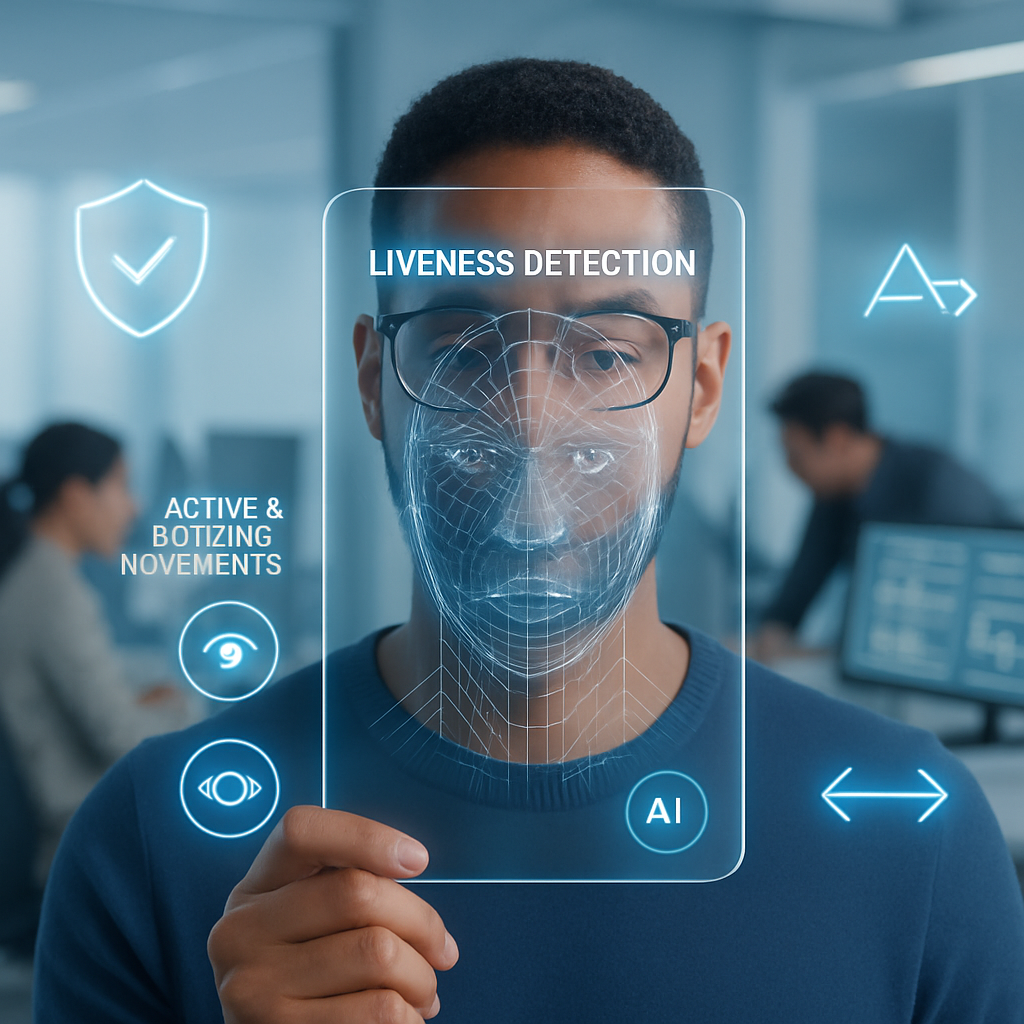
Understanding liveness detection and biometric verification has become crucial as identity authentication technologies evolve rapidly. These systems are designed to distinguish genuine users through subtle facial movements and environmental cues while minimizing user friction. Knowing how these checks function helps you navigate biometric processes more smoothly, reducing common errors caused by lighting, camera quality, or unnatural responses.
This guide explores key concepts such as active and passive liveness detection methods, addresses widespread myths about facial recognition bypass, and offers practical KYC biometric checks tips to optimize your experience. Whether you’re preparing for routine identity confirmation or learning about fraud prevention techniques, this overview provides actionable insights to improve your success with biometric systems in 2025.
Let’s explore how understanding these mechanisms and following best practices enhance reliability and ease interactions with advanced biometric verification technologies.
Understanding liveness detection and biometric verification is essential for navigating identity checks in 2025. This guide clarifies how these systems work, common pitfalls, and practical tips to improve your success during KYC and biometric processes.
- Master the types of liveness detection: Recognize differences between active, passive, and hybrid methods to anticipate system requirements.
- Balance security and user experience: Learn how passive detection enhances compliance by reducing user effort while maintaining robust fraud prevention.
- Avoid common biometric verification failures: Address factors like poor lighting, camera quality, and inconsistent movements that often cause rejections.
- Debunk facial recognition bypass myths: Understand why deepfake and spoofing tactics rarely succeed against advanced liveness systems.
- Follow best practices for KYC checks: Prepare by ensuring proper environment setup, maintaining natural expressions, and following on-screen prompts carefully.
- Leverage behavioral cues for success: Engage naturally with biometric systems as they rely on subtle facial movements and responsiveness to detect authenticity.
- Enhance identity verification reliability: Combine liveness detection with biometric verification to strengthen defenses against identity fraud effectively.
Next, we’ll explore actionable steps and environment optimizations to help you confidently pass biometric liveness checks. These insights are designed for informational and educational use, supporting better understanding of biometric systems without endorsing misuse.
Understanding Liveness Detection and Biometric Verification
What is Liveness Detection in Biometric Verification?
Liveness detection is a critical technology integrated into biometric verification systems designed to confirm that the biometric input—typically a facial image or video—originates from a live human being rather than a spoof or fraudulent representation. By analyzing subtle physical cues or behavioral patterns, liveness detection aims to differentiate real users from fake attempts such as printed photos, video replays, masks, or digital manipulations. This security layer protects identity verification processes from spoofing and impersonation, ultimately ensuring that only genuine users can complete authentication.
Key Objectives of Liveness Detection in 2025
The primary goal of liveness detection in 2025 extends beyond fraud deterrence to encompass a seamless user experience during biometric verification. Systems must strike a balance between robust security and minimizing friction for legitimate users, especially within KYC biometric checks where swift and user-friendly validation is essential. This involves reducing false rejections, avoiding intrusive prompts, and adapting dynamically to diverse environmental conditions and user behaviors to maintain trust and compliance.
Types of Liveness Detection: Active, Passive, and Hybrid
- Active Liveness Detection: This approach requires explicit user participation, such as blinking on demand, smiling, head turning, or following specific prompts shown on-screen. Active methods rely on detecting these deliberate actions to verify liveliness, offering high security but possibly affecting user convenience due to increased interaction complexity.
- Passive Liveness Detection: Passive systems analyze natural, spontaneous facial micro-movements, texture, reflection, and depth cues without interrupting the user with instructions. This method enhances user experience by reducing interaction time and is well suited to mobile environments but demands sophisticated algorithms to effectively detect spoofing attacks.
- Hybrid Approaches: Combining active and passive liveness detection leverages the strengths of both methods to optimize security and usability. For example, passive monitoring can validate basic liveliness, while active prompts are triggered only if anomalies are detected, enhancing overall verification success rates.
Understanding these types sets the foundation for recognizing why biometric verification may fail and how to improve user compliance.
Common Reasons for Biometric Verification Failure
Poor Environmental Factors
- Impact of Low Lighting and Shadows: Insufficient or uneven lighting can obscure facial features, causing the liveness detection system to miss key cues. Excessive shadows often distort contours, leading to false negatives.
- Camera Quality Limitations and Positioning Errors: Low-resolution cameras or incorrect device angles can blur crucial detail or present oblique views, undermining the accuracy of facial recognition verification.
User Behavior and Movement Issues
- Inconsistent or Unnatural Facial Movements During Checks: Users who make exaggerated or rapid head movements, avoid eye contact, or fail to follow prompts disrupt the expected behavioral patterns the system relies upon.
- Failure to Follow On-Screen Prompts Precisely: Skipping instructed gestures in active liveness detection—such as blinking or smiling on cue—results in automatic rejections.
Technical Limitations and System Sensitivities
- Hardware Compatibility and Software Constraints: Some older or less capable devices may not support certain biometric verification features fully, leading to compatibility issues.
- Common False Rejections and Troubleshooting Tips: High system sensitivity to subtle variances can cause false negatives; recalibrating system thresholds and ensuring regular software updates help mitigate these issues.
Addressing these common failure points improves overall success rates in biometric verification and highlights the importance of environment and behavior preparation.
Debunking Facial Recognition Bypass Myths
Why Deepfake and Spoofing Attacks Rarely Succeed
Despite heightened public concern about identity theft using deepfake videos or mask spoofing, advanced liveness detection algorithms effectively analyze minute physiological characteristics—such as facial texture, 3D depth information, eye reflection patterns, and involuntary micro-expressions—that remain difficult to replicate convincingly. Additionally, many frameworks incorporate dynamic challenge responses (active detection) that deepfake videos cannot reliably simulate in real time, thus preventing fraudulent attempts from passing biometric verification systems.
Common Misconceptions About Face Recognition Verification
- Limitations of Simple Photo or Video Spoofing: Static images or looping video replays are easily identified and flagged by modern liveness detection due to lack of live behavioral cues.
- System Adaptability to Evolving Biometric Fraud Prevention Techniques: Regular updates employing AI and machine learning continuously refine recognition accuracy, increasing resistance to emerging spoof tactics and decreasing false acceptance rates over time.
Clarifying these points reassures users about the reliability of biometric verification and discourages reliance on fraudulent solutions.
Best Practices to Pass Biometric Liveness Checks in 2025
Preparing Your Environment
- Ensure Adequate Lighting and Minimal Background Distractions: Position yourself in a well-lit area with balanced natural or artificial light, avoiding backlighting and harsh shadows to enhance facial feature visibility.
- Optimize Camera Setup for Clear, Frontal Face Capture: Hold the device steady at eye level, ensuring the camera lens is clean and unobstructed to prevent blurriness or misalignment during capture.
Behavioral Tips During Verification
- Maintain Natural Expressions and Fluid Movements: Avoid exaggerated gestures; remain relaxed to help passive liveness detection algorithms validate authenticity accurately.
- Respond Accurately to On-Screen Instructions and Prompts: If the process requests specific actions, follow these carefully and deliberately to satisfy active detection requirements.
Leveraging Behavioral Cues for Enhanced Success
Combining natural engagement with attentive compliance to prompts helps biometric systems discern live human presence reliably. For example, small, natural facial micro-expressions combined with steady posture convey authenticity, which reduces verification time and decreases rejection rates due to behavioral inconsistencies.
Implementing these practices facilitates smoother interactions with biometric verification platforms and supports successful liveness detection.
Integrating Liveness Detection into KYC and Fraud Prevention
The Role of Liveness Detection in Identity Verification
Liveness detection acts as a vital safeguard in Know Your Customer (KYC) biometric checks, ensuring that validations are performed on genuine individuals rather than fraudulent overlays. By integrating liveness verification with facial recognition and identity document cross-checks, organizations can significantly enhance defense mechanisms against identity-related fraud, streamline onboarding processes, and comply with regulatory mandates.
Future Trends in Biometric Verification and Security
Emerging trends include increasingly sophisticated AI-driven multi-modal systems that combine face, voice, and behavioral biometrics to heighten verification accuracy. Additionally, privacy-preserving techniques such as decentralized biometric data storage and edge-processing are gaining traction to mitigate data vulnerabilities. These advances will likely shape regulatory frameworks and broaden adoption challenges in KYC biometric checks over the coming years.
Recognizing these evolving trends prepares stakeholders to adopt more resilient and user-centric biometric verification practices.
Additional Resources and Templates to Support Identity Verification Needs
For professionals designing or testing biometric verification workflows, access to realistic mockups and editable templates can facilitate training, educational projects, or UI/UX development. The following resources offer practical tools for such purposes:
- ID Card PSD Templates for realistic identification mockups reflecting diverse scenarios.
- Selfie PSD Templates to simulate facial images used in verification contexts effectively.
- Editable KYC Template in Word and PDF facilitating the creation of mock KYC documentation for design and training.
- Selfie with Passport PSD Templates useful for instructional materials and verification scenario previews.
Exploring these templates can enhance understanding and support smoother implementation of biometric verification systems incorporating liveness detection.
Conclusion
Biometric verification increasingly depends on sophisticated liveness detection technologies to distinguish genuine human users from fraudulent attempts by analyzing subtle physiological and behavioral cues. Understanding the nuances between active, passive, and hybrid detection methods is crucial for balancing security with user experience, especially as systems evolve to meet diverse environmental conditions and device capabilities. Addressing common verification challenges—such as poor lighting, improper device positioning, and user non-compliance with prompts—can significantly improve success rates and reduce frustration during authentication processes.
Emphasizing proper preparation, including optimized environments and natural user behavior, enhances the efficiency of biometric checks while mitigating false rejections. As biometric verification advances with AI-powered multi-modal methods and privacy-focused innovations, staying informed of these trends is key for designing reliable, user-centric solutions that maintain operational consistency and resilience.
For professionals involved in creating or testing biometric verification workflows, leveraging realistic editable document templates and PSD mockups—such as ID Card PSD Templates and Editable KYC Template in Word and PDF—provides valuable tools to simulate and refine user experiences. Integrating these resources supports clearer understanding and smoother implementation of liveness detection components, ultimately promoting better quality and efficiency in biometric verification efforts.