
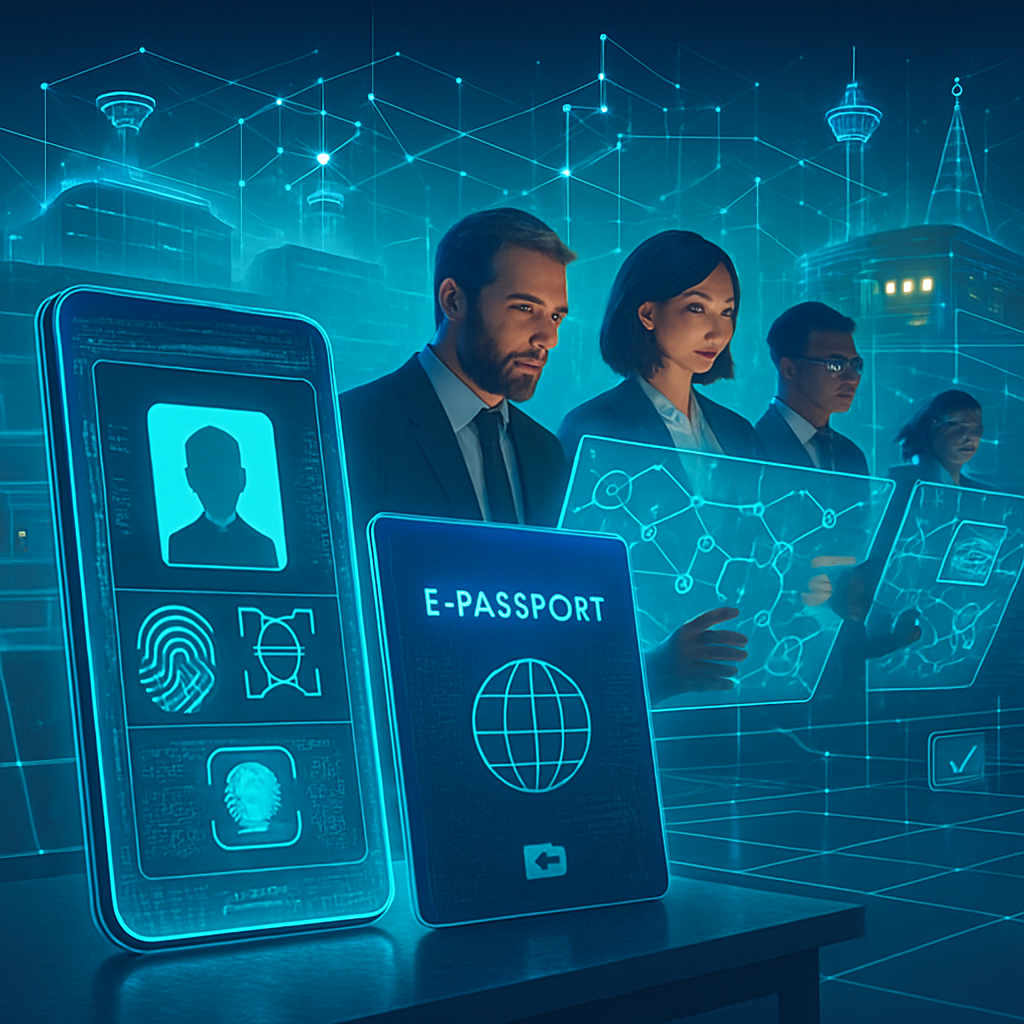
How is the shift from physical documents to digital ID and e-passports transforming identity management worldwide? Understanding this transition is key as blockchain identity technology increasingly defines the future of KYC processes by enhancing security, transparency, and user control. Exploring the benefits of digital identity—such as streamlined workflows, improved data privacy, and reduced fraud risks—offers valuable insights for anyone navigating today’s evolving verification landscape.
This guide breaks down the fundamentals of digital ID and e-passport systems, highlights blockchain’s role in creating decentralized identity frameworks, and examines emerging trends shaping the future of electronic KYC. Readers will gain a clear comparison between digital identity solutions and traditional physical documents, along with practical perspectives on data ownership and privacy management. Let’s explore how these innovations are setting new standards for global verification and what they mean for the digital identity ecosystem going forward.
These templates are intended for design practice, mockups, and film props; they are not substitutes for official documents.
Understanding the shift from physical documents to digital ID and e-passports is crucial in today’s fast-evolving verification landscape. This guide explores how blockchain technology reshapes identity management and the future of KYC processes.
- Clarify digital identity fundamentals: Define digital ID and e-passport concepts and their role in global verification systems.
- Highlight blockchain’s transformative role: Explain how blockchain enhances security, transparency, and immutability in identity verification.
- Contrast digital IDs with physical documents: Examine advantages such as convenience, reduced fraud risk, and streamlined verification workflows.
- Emphasize user data ownership: Showcase blockchain’s unique ability to empower individuals with control over their identity data and privacy.
- Review future KYC innovations: Explore trends like electronic KYC (eKYC), decentralized identity models, and evolving regulatory standards.
- Address privacy and democratization concerns: Discuss how emerging systems balance security with users’ rights to manage and share their information selectively.
- Include practical comparisons: Detail use cases comparing digital identity wallets against traditional physical passports in everyday scenarios.
Next, the article will delve deeper into specific blockchain mechanisms empowering secure digital ID systems and outline practical steps for integrating these technologies into compliance workflows. These templates and insights are provided for educational purposes and design reference, not as substitutes for official identification documents.
Understanding Digital Identity and E-Passport Fundamentals
Defining Digital ID and E-Passport Concepts
Digital identity forms the foundation for modern identification, encapsulating a set of verifiable attributes like name, date of birth, biometrics, and unique identifiers in electronic form. E-passports extend this concept by embedding encrypted biometric data such as fingerprints or facial recognition information in a secure chip, complying with ICAO standards for international travel.
Implementing editable document templates, such as passport PSD mockups, aids in visualizing and customizing these essential elements for design or educational purposes, streamlining the creation of consistent, verifiable layouts.
Role in Global Identity Verification Ecosystems
Digital IDs and e-passports are integral to interconnected identity verification systems worldwide. Their interoperability enables automated border controls and seamless authentication across government agencies and private sectors, including banking and telecom. This reduces manual processing time and errors while enhancing security checks through cryptographic validation and biometric matching.
By understanding these ecosystem roles, designers and developers can tailor editable templates to reflect both functional and security standards, supporting efficient workflows in identity verification.
Blockchain Technology’s Transformative Role in Identity Management
Enhancing Security with Blockchain
Blockchain technology secures digital identities by recording authentication events and modifications as immutable blocks. Cryptographic hashing ensures that each record cannot be altered without detection, preventing fraud and unauthorized data tampering.
When integrating blockchain considerations into editable passport PSD or document templates, embedding features like QR codes representing blockchain-verified credentials can bridge visual design with backend security efficiently.
Transparency and Decentralization Benefits
Unlike centralized databases vulnerable to breaches or censorship, blockchain empowers decentralization. It distributes identity data across peer-to-peer networks, allowing users and authorized verifiers to access digital identity proofs without intermediaries, thereby increasing trust and reducing single points of failure.
Document templates can reflect this transparency by including clearly marked verification indicators or links to blockchain registries, aligning UX design with decentralization principles.
Empowering User Data Ownership and Privacy
Blockchain’s self-sovereign identity approach enables individuals to own and manage personal data directly. Users selectively share credentials through cryptographically secure channels, minimizing exposure of sensitive information.
Designing editable identity templates with modular placeholders for selective data fields supports this granular sharing model, ensuring that only the necessary information is disclosed during verification.
Digital Identity vs. Physical Documents: Key Advantages
Convenience and Accessibility
Digital identity solutions facilitate instant remote verification without physical document exchange, accelerating processes like online banking, travel check-ins, and government service access. This eliminates geographic constraints and physical handling delays inherent to passports or IDs.
Editable templates tailored for digital IDs emphasize clean, readable layouts that adapt seamlessly across devices and platforms, ensuring the user interface remains intuitive.
Reduced Fraud and Identity Theft Risks
Blockchains’ immutable ledgers and biometric encryption mitigate forgery and cloning risks that plague physical documents. Moreover, dynamic digital identities can update in real-time, invalidating compromised credentials swiftly.
Passport PSD templates crafted for prototyping can incorporate anti-tamper design elements, such as embedded holograms or secure layering, simulating physical security features to enhance awareness of fraud prevention.
Streamlined Verification Workflows
By integrating digital IDs and e-passports into KYC processes, organizations reduce manual identity checks, enabling auto-validation via trusted digital sources and lowering administrative overhead. This results in faster onboarding and improved user experiences.
Utilizing editable format templates with consistent table structures and data placeholders accelerates repeated form generation, maintaining accuracy in totals and dates aligned with locale conventions.
- Explore relevant editable passport PSD templates for design practice: Bangladesh Passport PSD Template
Future Trends in KYC and Electronic KYC (eKYC)
Decentralized Identity Models in KYC
Emerging eKYC frameworks leverage blockchain-based decentralized identifiers (DIDs), enabling users to present verifiable credentials without disclosing excessive personal data. This reduces dependency on centralized databases and enhances privacy compliance.
Editable document templates designed for eKYC workflows should accommodate integration of digital signatures, cryptographic proofs, and multi-factor biometric sections to meet upcoming decentralized standards.
Emerging Regulatory Standards and Compliance
Governments and international bodies are updating guidelines to incorporate electronic signatures, blockchain proofs, and remote identity verification. Ensuring editable templates conform to data retention, consent, and audit requirements will be critical for lawful deployment.
Template packs that incorporate locale-specific regulatory fields, date/currency formatting, and privacy disclaimers support adherence to evolving compliance demands globally.
Innovations Driving the Future of KYC
Artificial intelligence coupled with blockchain is enabling real-time identity analytics and anomaly detection within KYC processes. Identity wallets with biometric locks and dynamic credential presentation improve security and usability.
Designing templates with placeholders for biometric indicators and AI-powered verification logs ensures readiness for integration with future-proof KYC solutions.
- See customizable official document templates useful as design references: Bangladesh Passport Application Form Template
Balancing Privacy, Security, and User Rights in Digital Identity Systems
Privacy Concerns in Digital Identity Deployments
Digital identity systems must confront issues such as unauthorized surveillance and the potential misuse of personal data. Threat modeling and privacy-by-design principles help mitigate risks within blockchain frameworks.
Implementing anonymization techniques or zero-knowledge proofs in editable identity templates can simulate privacy-preserving verification flows, increasing trust among users.
User Control Over Personal Data
Strong user agency mandates clear consent management interfaces, enabling individuals to approve or revoke data sharing instantaneously. Blockchain’s transparency supports auditability for such consents, fostering accountability.
Designing editable PSD or Word document templates to include consent checkboxes, timestamps, and digital signature fields encourages best practices in user data control.
Democratizing Access without Sacrificing Security
Open yet secure digital identity systems require layered permissioning, where sensitive credentials remain protected but accessible to authorized entities promptly. Transparent policies that balance openness and privacy underpin democratized access.
Templates that integrate tiered metadata and secure layering of visual elements prepare designs for scalable access control in identity verification environments.
Practical Comparisons: Digital Identity Wallets Versus Physical Passports
Real-World Use Cases and Scenarios
Digital identity wallets expedite identity verification in contexts like airport self-check-in, online financial services, and event access management—reducing queues and manual document handling compared to physical passports.
Editable passport PSD mockups can be used to simulate these scenarios, highlighting differences in visual feedback, data fields, and verification indicators that separate digital wallets from physical counterparts.
Transitioning Toward Digital Identity Adoption
Adoption requires a phased approach: starting with raising awareness, piloting hybrid models that accept both digital and physical IDs, and progressively updating workflows and regulatory frameworks. Training developers and users on digital identity benefits and risks ensures smoother transitions.
Customizable templates featuring editable sections for new identity components support ongoing evolution, enabling updates without rebuilding document design from scratch.
- Reference editable passport mockups suitable for educational or design uses: Colombia Passport Template PSD
Legal & Ethical Use of Passport PSD Mockups
- These templates are intended strictly for educational purposes, mockups, and film props design.
- They must not be used as official or substitute identification documents under any circumstances.
- Users should ensure compliance with local laws when handling digital or physical ID resources.
Conclusion
Exploring the fundamentals of digital identity and e-passports reveals their critical role in streamlining secure, interoperable identity ecosystems fueled by blockchain technology. Editable document templates such as passport PSD mockups provide designers and developers with valuable tools to visualize and prototype layouts that incorporate biometric data, cryptographic proofs, and compliance features. This approach supports both educational purposes and the advancement of privacy-conscious, user-centric digital identity solutions.
Harnessing well-crafted editable templates enables consistent formatting, faster iteration, and locale-appropriate customization—key factors for maintaining accuracy and professionalism in identity-related workflows. By integrating modular components for selective data sharing and transparent verification indicators, these templates align design with emerging regulatory expectations and decentralized identity models, preparing stakeholders for the future of KYC and digital identity adoption.
As identity management continues to evolve, the challenge remains to balance robust security with user empowerment and privacy. Embracing adaptable, reusable editable templates will be essential for designers and organizations aiming to create seamless, secure, and privacy-respecting digital identity experiences. Exploring resources like the Bangladesh Passport PSD Template and Bangladesh Passport Application Form Template can provide practical starting points for such innovative design efforts.
These templates are intended for design practice, mockups, and film props; they are not substitutes for official documents.