
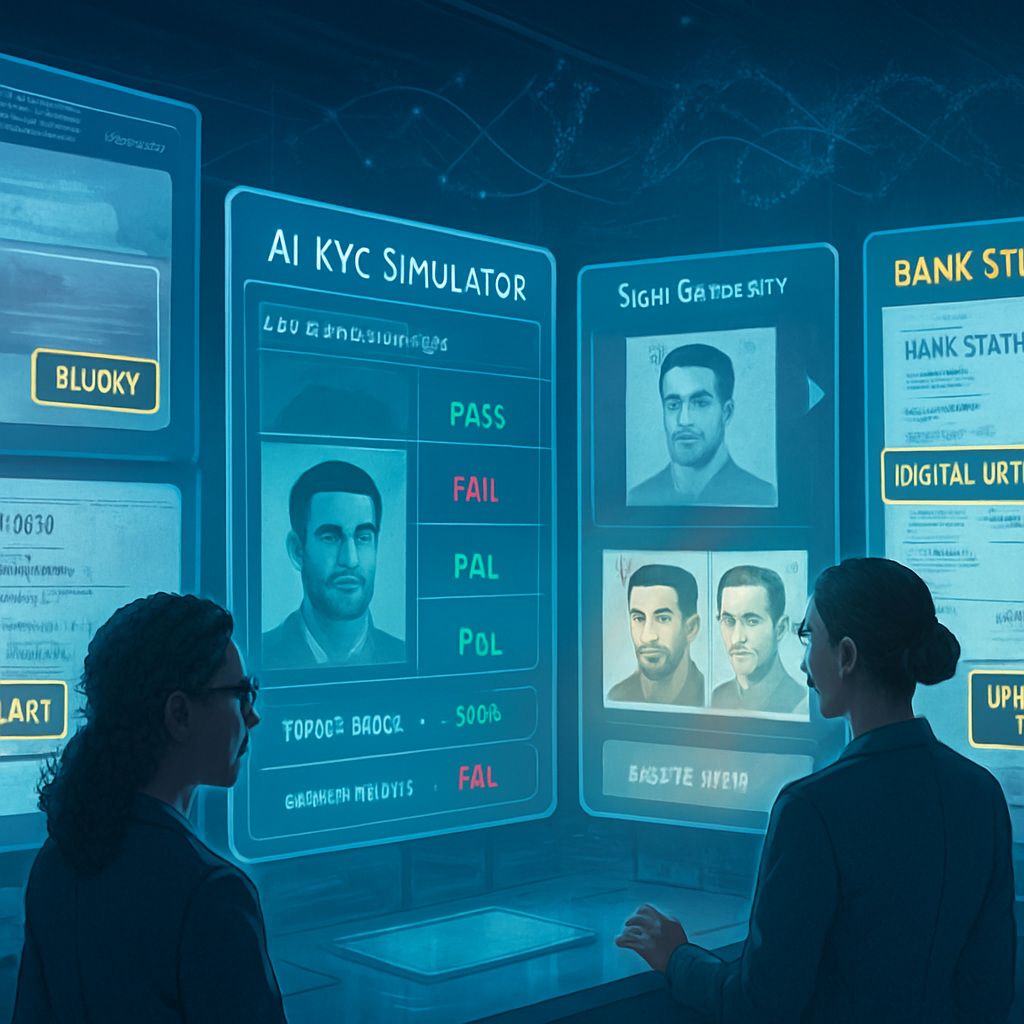
Experiencing repeated KYC verification failed notifications can be frustrating when submitting identity documents online. Understanding the key reasons behind these setbacks is essential for improving document quality and meeting the increasingly sophisticated AI-driven detection standards. From common issues like blurry images and name mismatches to the challenges of converting digital photos into physical-scan-quality files, mastering these elements saves time and reduces rejection risks.
This guide provides actionable identity verification tips 2026, emphasizing how to fix document rejection by simulating the AI verification process with advanced KYC simulators. You’ll learn practical methods for optimizing your documents, including correct metadata handling and using real physical scan generators, to enhance compliance readiness ethically and effectively. Let’s explore how leveraging these AI-powered tools transforms your submission approach and minimizes automated errors.
Understanding why your KYC verification fails is crucial for successful identity checks in 2026. This article uncovers how AI detection systems identify common pitfalls and how using advanced simulators can help you ensure document acceptance.
- Identify common rejection causes: Blurry images, name mismatches, and inconsistent document formats frequently trigger verification failure.
- Recognize AI detection of digital artifacts: Automated systems flag subtle signs like metadata anomalies and ‘digital look’ elements missed by most users.
- Use AI KYC simulators to pre-test documents: Simulating the verification process reveals compliance issues before submission, reducing rejection risk.
- Convert digital photos into physical-scan-like images: Properly optimized scans with authentic textures and correct metadata improve acceptance chances.
- Apply practical fixes for document preparation: Follow identity verification tips 2026 to align files with evolving AI detection standards.
- Bypass automated verification errors ethically: Focus on legitimate document quality improvements rather than attempts to circumvent controls.
- Leverage real physical scan generators: These tools create images closely resembling genuine scans to satisfy AI quality checks effectively.
Next, the article will guide you through step-by-step methods to simulate your KYC documents, convert digital photos correctly, and reduce verification failures. These insights are meant for enhancing compliance readiness and do not endorse any malicious activities.
Understanding Why KYC Verification Fails
Editable document templates such as bank statements, utility bills, pay stubs, invoices, and passport PSD mockups form the backbone of identity verification processes. Understanding why KYC verification fails often starts with acknowledging common pitfalls in the documents themselves. Often, these failures are due to poor image quality, inconsistencies in data, or deviations from expected document formats.
Common Causes of Document Rejection
Low-resolution or blurry images significantly hinder AI’s ability to extract and verify data accurately. When personal information such as names or addresses do not match across documents, automatic systems flag these inconsistencies. Furthermore, irregularities in standard layout or format—such as unusual column arrangements, fonts, or missing required fields—can trigger rejection by AI-driven verification tools.
By addressing these typical causes early in the document creation or editing process, users can drastically reduce verification issues. This understanding paves the way to practical tips on preparing compliant documents efficiently.
How AI Detection Systems Identify Issues
Modern AI detection systems employ advanced metadata analysis tools that look for signs of digital manipulation or editing, such as unusual timestamps or missing scan-source information. They also detect subtle digital artifacts introduced during improper editing—these may be invisible to human reviewers but raise algorithmic suspicion.
Additionally, AI checks for the presence of physical scan characteristics—like paper grain texture, lighting shadows, or slight distortions caused by scanning hardware—that digital photos often lack. Recognizing these subtle traits allows the AI to distinguish between authentic document scans and digitally produced images.
Knowing these detection methods informs how editable templates should be structured and optimized to avoid these common red flags and ensure smoother acceptance in verification processes.
Practical Identity Verification Tips 2026
Preparing High-Quality KYC Documents
When customizing editable templates, clarity and consistency are paramount. Always use high-resolution source images and ensure lighting is even to eliminate shadows or glare. Every piece of personal data—names, addresses, dates—should be cross-checked for uniformity across all submitted documents to meet AI consistency checks.
Maintaining formatting fidelity to issuer standards is also critical. This includes following the typical font styles, sizes, and layout structures featured in authentic documents. Adhering to established standards helps prevent AI systems from flagging format inconsistencies.
Converting Digital Photos into Physical-Scan-Like Images
To mimic authentic scanned documents, it is effective to enhance texture and color profiles using image editing tools. Introducing subtle paper textures and adjusting color balance to match typical scanner output can make documents appear more natural. Correcting metadata to emulate scanning device samples can also improve acceptance in automated systems.
It is vital, however, to avoid compression artifacts by exporting final documents at high resolution and in suitable formats like lossless PNG or high-quality PDFs. This preserves image integrity and reduces the likelihood of AI rejection due to quality degradation.
Implementing these practical steps can significantly raise the quality of utility bills and other documents customized from editable templates, improving their suitability for identity verification.
Using AI KYC Simulators to Pre-Test Your Documents
How KYC Simulators Work
AI KYC simulators replicate the verification algorithms used by official systems to analyze submitted documents. They assess validity by scanning for errors such as image blurriness, metadata discrepancies, format anomalies, and inconsistent textual data. This preemptive scanning identifies subtle flaws before actual submission, saving time and reducing rejection risk.
Step-by-Step Guide to Simulate Your KYC Documents
- Upload your editable document, whether a PDF or PSD mockup, into the AI simulator platform designed to validate document authenticity.
- Carefully review flagged issues—these might include insufficient resolution, incorrect metadata, or layout inconsistencies.
- Make targeted corrections focusing on the areas highlighted, such as enhancing image clarity, adjusting metadata, or realigning tables.
- Re-upload the improved version for re-testing until the document passes AI criteria successfully.
Pairing this process with the use of editable identity document templates ensures users can polish documents reliably before official verification attempts.
Fixing Document Rejection: Practical Steps
Optimizing Document Quality for AI Compliance
Effective optimization focuses on improving core quality factors without introducing distortions. Enhancing resolution must be done with image processing tools that avoid noise amplification, maintaining sharpness and detail. Converting files to consistent, widely accepted formats (PDF/A or Word DOCX) with standardized color profiles (such as sRGB) prevents compatibility issues with AI algorithms.
Verifying metadata is essential; remove or replace suspicious tags such as editing software signatures that automation flags as manipulation evidence. Tools that strip or clean metadata can be integrated into workflows for repeatable success.
Ethical Considerations When Addressing Automated Verification Errors
While improving document quality is necessary, it is critical to emphasize ethical boundaries. Users should enhance the fidelity and legibility of original documents rather than attempt alteration that could misrepresent information. Adherence to legal submission guidelines and transparency ensures practices remain above board.
Understanding AI system limitations helps refine document preparation without seeking workarounds that compromise authenticity. This balanced approach fosters trust and compliance in verification contexts.
For complex documentation needs, business registration certificate templates designed for clarity and verifiability offer a robust solution.
Leveraging Real Physical Scan Generators
What Are Physical Scan Generators?
Physical scan generators are specialized software tools that transform digital images into outputs closely resembling genuine paper document scans. They simulate lighting effects, paper textures, natural distortions, and include metadata consistent with standard scanning devices.
By replicating these physical characteristics, documents created from editable templates gain the visual and technical traits AI verification systems associate with authenticity, reducing suspicion.
Benefits of Using Physical Scan Generators
- They minimize artificial digital patterns that automated systems target for rejection, improving overall acceptance rates.
- Documents gain a natural aesthetic similar to originals, satisfying both AI algorithms and human reviewers.
- Integrating scan generators with editable templates from trusted collections ensures a seamless workflow from creation to verification.
Combining these tools with the registration certificate templates collection enables users to streamline high-quality document creation perfectly tailored for verification scenarios.
Conclusion
In summary, the success of identity verification processes hinges on producing high-quality, consistent, and properly formatted documents using editable templates like bank statements, utility bills, and passport PSD mockups. Recognizing common pitfalls such as blurry images, data inconsistencies, and format deviations is essential to avoid AI-driven rejection. Leveraging practical techniques, from enhancing image clarity and metadata correction to simulating physical scan characteristics, empowers users to create documents that better align with verification system expectations.
Utilizing AI KYC simulators to pre-test and refine editable document templates further optimizes compliance, saving time by identifying and addressing issues before submission. Prioritizing ethical document preparation ensures improvements focus on clarity and accuracy rather than misrepresentation, fostering responsible use of these resources. Additionally, integrating tools like physical scan generators with trusted template collections offers an effective way to replicate authentic document traits, enhancing both automated and human assessment outcomes.
Maintaining a disciplined approach to document quality and consistency not only streamlines workflows but also elevates reliability across verification-related tasks. As digital processes continue to evolve, embracing these best practices will remain crucial for producing editable documents that meet increasingly sophisticated standards while supporting efficient and transparent operations.