
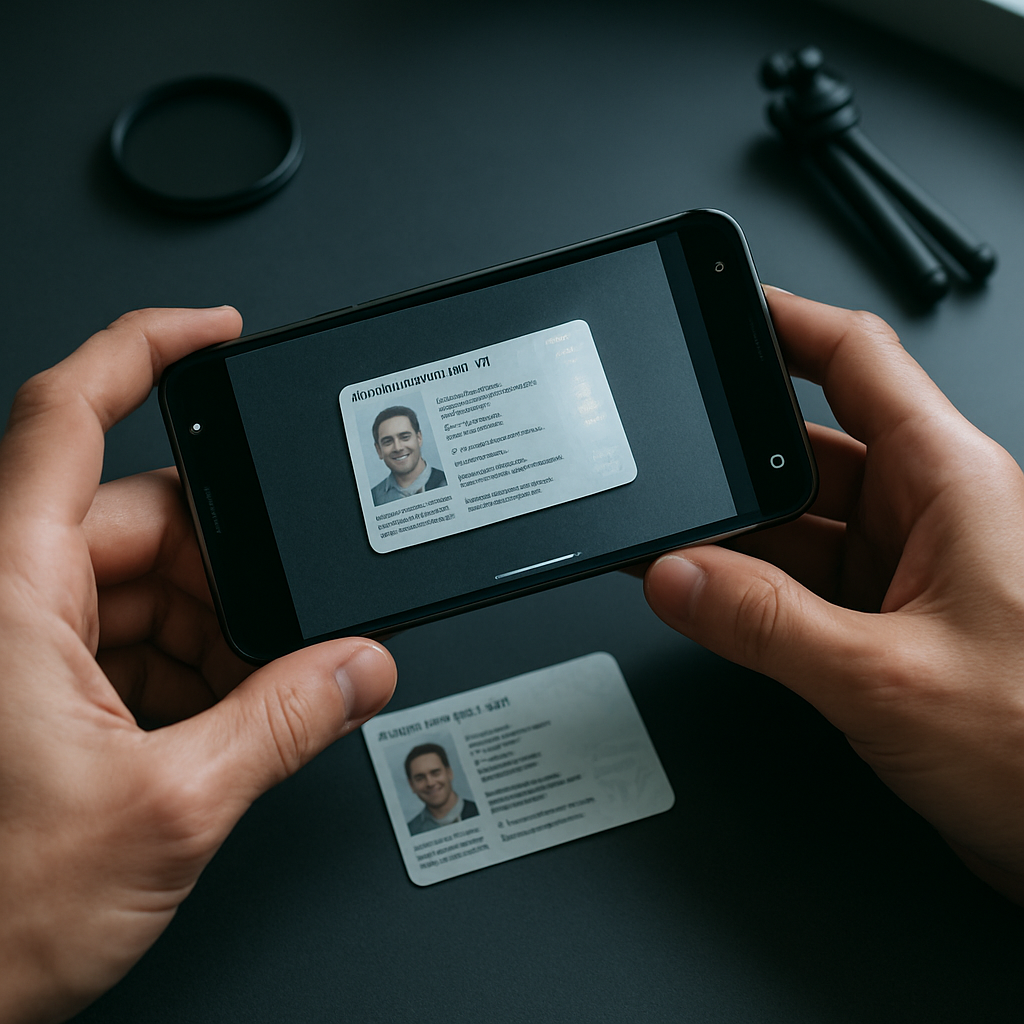
Facing a Binance verification failed message can halt your progress when uploading identity documents, often due to issues like blurry images or glare interfering with OCR document scanning. Understanding how to capture clear, glare-free photos and submit files correctly can save you time and reduce repeated rejections.
This guide explains key reasons why Binance KYC failed notifications occur and offers practical tips for improving document clarity and following recommended upload formats. By optimizing photo quality and eliminating common obstacles like reflections, you can enhance your document’s readability and smooth out the resubmission process.
Let’s explore how to prepare and upload documents that meet Binance’s standards, covering step-by-step techniques to avoid Binance document upload issues and boost your chances of instant approval.
Experiencing Binance verification failed messages can be frustrating, but understanding how to properly prepare and upload documents can dramatically improve your approval chances. This guide highlights practical tips focused on photo clarity and eliminating common obstacles that cause Binance KYC failures.
- Identify common Binance KYC failure reasons: Recognize issues like blurry images, incomplete documents, and glare that disrupt the verification process.
- Optimize document photo clarity: Use natural lighting and steady hands to capture sharp, glare-free photos that meet Binance’s OCR quality standards.
- Eliminate glare and reflections: Since glare interferes with OCR scanning, adjust angles and lighting to prevent reflections that cause text recognition errors.
- Follow clear resubmission steps: After a failed attempt, promptly clean the document image and re-upload using Binance’s recommended file formats and resolution.
- Understand Binance’s document requirements: Confirm accepted document types and ensure all edges and details are visible for seamless identity verification.
- Hidden insight—focus on OCR-friendly photos: Many users overlook how glare specifically hinders OCR reading; reducing reflections significantly boosts approval chances.
- Use helpful guides for instant approval: Applying these practical tips can help you quickly pass Binance’s verification without repeated failures or delays.
Next, we’ll explore step-by-step techniques for capturing and submitting flawless identity documents that Binance’s system accepts on the first try. These guidelines help enhance your upload quality and avoid verification setbacks.
Common Reasons Binance Verification Failed Notifications Occur
Blurry or Low-Resolution Images
One of the primary reasons Binance verification fails is due to blurry or low-resolution images. Binance’s OCR (Optical Character Recognition) system relies on clear text and recognizable document features to extract data accurately. When images lack sharpness, it struggles to identify critical details such as document numbers, names, and expiry dates. This often results in automatic rejection.
To prevent this, always use a camera with sufficient megapixel count and ensure proper focus before capturing your ID. Avoid digital zoom as it can degrade resolution further. Taking multiple shots and reviewing them for clarity can save time during submission.
Incomplete or Cropped Documents
Submitting photos where the document edges are cropped or partially visible is another common cause of failure. Binance requires the entire ID or utility bill to be visible so its system can verify document integrity, authenticity elements, and layout. Missing corners, cut-off text, or covered security features raise flags that halt approval.
Ensure your document is fully captured within the frame and avoid including fingers or objects covering any part of the document. Using a preview function to check the image borders before uploading helps confirm completeness.
Glare and Reflections Affecting OCR Scanning
Glare from overhead lights, windows, or flash photography creates bright spots on documents that obscure text and security marks. These reflective artifacts confuse OCR engines and reduce data recognition accuracy drastically. A common mistake users make is photographing IDs behind shiny surfaces or in poorly diffused lighting environments.
Reducing glare requires mindful lighting choices and camera positioning, which we will cover in detail later to improve your document capture results.
For deeper insights on KYC verification failures across platforms, see our KYC Verification Tips and AI Simulator Guide.
How to Capture Clear, OCR-Friendly Photos of Your Identity Documents
Using Natural, Diffused Lighting to Minimize Glare
Natural light is often the best for photographing documents, especially when it is diffused, such as near a north-facing window or on an overcast day. Diffused lighting softens shadows and eliminates harsh reflections that a direct light source can cause.
Set up your document on a flat surface and avoid direct sunlight or intense artificial lights. If indoor lighting is unavoidable, try using a white sheet or diffuser between the light source and document to spread light evenly.
Keeping Your Camera Steady to Avoid Blurriness
Camera shake is a frequent culprit for blurry images. To combat this, use a tripod or place your camera/phone on a stable surface. If neither is available, lean against a steady object and hold your breath while snapping the photo.
Using the timer function allows your hands to be free of the device when the shutter clicks, further reducing motion blur. Consistently sharp photos help the OCR read text more reliably and reduce the need for retakes.
Proper Document Placement and Background Selection
Place the document flat on a clean, non-reflective surface. Choose a background that contrasts with your document’s color—usually a solid dark table works best for passport pages or lighter IDs. This contrast assists OCR algorithms by clearly defining document edges and preventing confusion with background patterns.
A busy or textured background often causes OCR software to misinterpret document boundaries and text, leading to failure.
Ensuring All Document Edges and Details Are Visible
Align your camera parallel to the document plane to avoid distortion or skewing. Crop the image tightly so no excessive background appears but ensure no part of the document is out of frame. Edges, corners, stamps, watermarks, and holograms must be visible in the image to satisfy Binance’s document review criteria.
Double-check your photos before submission, as submitting complete images reduces rejection rates significantly.
Eliminating Glare and Reflections: Practical Steps
Adjusting Document and Camera Angle
Simple angle changes can make a big difference in glare reduction. Tilt the document or shift your camera slightly to change the reflection path away from the lens. Avoid photographing directly under strong ceiling lights or using the flash unless necessary.
Test different angles by capturing multiple shots and selecting the one with minimal glare highlights. This approach is often more effective than relying on post-processing glare removal.
Using Polarizing Filters or Matte Surfaces
For those with access to photography accessories, a polarizing filter on your camera can significantly reduce reflective shine on laminated or glossy documents. This filter blocks polarized light reflections, enhancing overall image clarity for OCR recognition.
If filters are unavailable, place the document on a matte surface rather than glass or glossy materials to reduce light bouncing. Sometimes, covering glossy IDs with a thin, transparent matte sheet can also help without obscuring details.
Learn more about how glare impacts OCR document scanning in our detailed article on Understanding Binance OCR Requirements and Quality Standards.
Step-by-Step Guide to Resubmitting Documents After Binance Verification Failed
Reviewing the Rejection Reason Carefully
Before resubmission, analyze the feedback from Binance’s verification team. Typical failure reasons include blur, glare, incomplete documents, or mismatched details. Understanding the exact cause helps you target your corrective actions accurately rather than guessing.
For example, if the error states ‘document edges not visible,’ focus your efforts on re-capturing a full-frame photo. If OCR cannot scan text, prioritize clarity and lighting improvements.
Editing and Cleaning Up Your Document Images
Basic post-capture editing can enhance image quality but should be done cautiously to avoid altering document authenticity. Adjust brightness and contrast slightly to improve legibility, and crop the image to remove unnecessary background. Avoid over-sharpening or applying filters that distort text.
Free image editors like GIMP or Paint.NET offer straightforward tools for these adjustments. Keep the original file untouched in case you need to revert.
Uploading Using Binance’s Recommended File Formats and Resolution
Binance typically accepts JPEG and PNG file formats with size limits around 5MB. Images should be at least 300 DPI for optimal OCR processing, ensuring clarity without excessively large file size.
Ensure images are in a standard color mode such as RGB and not CMYK, which some cameras default to in printing modes. Checking file properties before uploading avoids technical rejections.
For a comprehensive tutorial on resetting and resubmitting Binance KYC documents, visit Binance Identity Verification Reset Guide.
Understanding Binance’s Document Photocopy and Upload Requirements
Accepted Document Types for Identity Verification
Be aware of the specific documents Binance accepts for KYC purposes. Commonly accepted IDs include passports, driver’s licenses, and national identity cards. Each must meet issuance requirements such as government origin and validity.
Utility bills and bank statements may also be used for address verification but usually must be recent (within 3 months) and include the user’s full name and address exactly as registered on Binance.
Ensuring Document Freshness and Legibility
Documents that are old, damaged, or altered often trigger verification failures. Wear and tear, smudges, or faded printing make it hard for OCR systems and manual reviewers to authenticate details. Always provide clean, up-to-date originals or official copies as accepted by Binance’s guidelines.
Maintaining Consistency Between Document Information and User Profile
A vital factor in approval is strict alignment between the name, date of birth, and other personal data on the uploaded document and the information entered in your Binance account profile. Any discrepancies—even minor spelling variations—can cause rejections or delays.
Double-check all profile fields before submitting documents and update them if necessary to match exactly.
Tips and Tricks for Instant Approval of Binance KYC Documents
Focus on OCR-Friendly Photo Characteristics
Enhance your chances for instant approval by ensuring your photo features:
- Sharp focus with no blur
- Even, glare-free lighting
- Complete visibility of the whole document
- Accurate color reproduction
These characteristics maximize OCR accuracy and minimize manual review flags, accelerating verification time.
Common Pitfalls to Avoid During Document Uploads
- Uploading screenshots or screen captures instead of original photos reduces image quality
- Using PDFs that embed low-resolution images diminishes text legibility
- Submitting expired, altered, or unsupported document types triggers automatic rejection
Leveraging Professional Templates to Prepare Documents
Using professionally designed PSD templates can help ensure your document layout and details are arranged correctly before photographing or scanning. Templates allow you to preview edge placement, text position, and security features in an editable format, reducing errors caused by misaligned or cropped originals.
Explore our reliable KYC Verification Credit Products for preparing better-quality identity submissions.
Conclusion
Successfully navigating document submission challenges requires a clear understanding of the common issues that cause verification failures. From ensuring crisp, high-resolution images to avoiding glare and capturing complete, unobstructed documents, attention to detail plays a pivotal role in creating OCR-friendly photos. Proper lighting, steady camera placement, and meticulous framing all contribute to faster and more reliable processing by Binance’s verification system.
Adhering to accepted document formats, maintaining up-to-date and consistent personal information, and leveraging professional templates elevate the overall quality and compliance of your submissions. These practices not only reduce the likelihood of rejections but also save valuable time by minimizing repetitive resubmissions and delays.
As document verification processes evolve, embracing thoughtful preparation and precision remains essential. Challenge yourself to refine your capture techniques and adopt tools that streamline your workflow—doing so enhances accuracy and efficiency in every submission cycle.