
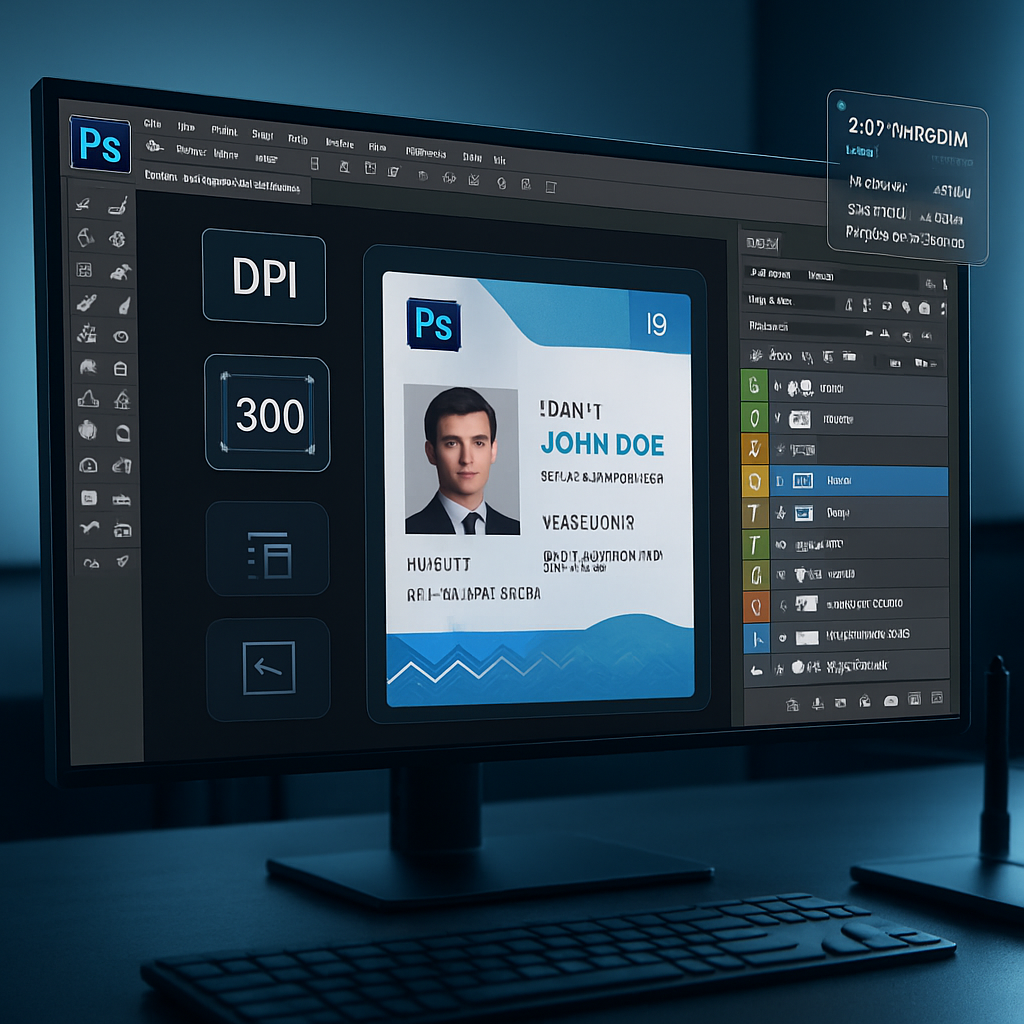
Creating high-quality PSD ID templates requires precise attention to resolution, font accuracy, and embedded metadata to ensure designs function seamlessly in professional software testing and validation environments. Achieving the right DPI settings, matching document template fonts legally, and maintaining well-organized layers can dramatically improve your workflow, delivering crisp, scalable outputs and consistent formatting.
Understanding how document metadata impacts usability allows designers to embed essential EXIF data, enhancing interoperability and reliability beyond mere visual fidelity. This guide walks you through critical techniques such as verifying font licenses, checking resolution standards, and embedding metadata correctly, empowering you to produce high-resolution document templates that meet professional design requirements with consistency and accuracy. Let’s explore how focusing on these technical essentials elevates your graphic design for testing and ensures your PSD ID templates achieve optimal performance. These templates are intended for design practice, mockups, and film props; they are not substitutes for official documents.
Understanding the technical essentials of PSD ID templates is key to creating high-quality, functional designs suited for professional testing and validation. This guide delves into resolution, font accuracy, and metadata roles that ensure your templates perform reliably beyond visual appeal.
- Ensure high-resolution standards: Use DPI settings of 300 or above to guarantee crisp, scalable ID templates suitable for real-world applications.
- Match fonts accurately and legally: Employ fonts that replicate original documents precisely while respecting licensing requirements to maintain authenticity and compliance.
- Embed and review metadata: Include and verify EXIF and other metadata within PSD files to support software testing and proper document validation workflows.
- Optimize layer organization: Maintain structured, clearly named layers to facilitate easy edits and improve template usability across design tools.
- Leverage professional editing software: Use advanced PSD editors that support metadata inspection and high-resolution export options for consistent output quality.
- Understand metadata’s impact: Recognize how embedded data influences template interoperability with document verification software and testing environments.
- Apply best practices consistently: Follow established guidelines to balance visual fidelity, technical accuracy, and metadata completeness in your PSD ID templates.
Next, we explore step-by-step techniques for verifying font licenses, checking DPI settings, and embedding metadata correctly to elevate your PSD ID templates to professional standards. These templates are intended for design practice, mockups, and film props; they are not substitutes for official documents.
Understanding Resolution Requirements for High-Quality PSD ID Templates
Creating editable document templates such as PSD ID templates demands careful attention to resolution to ensure the final output remains crisp and professional. Resolution, measured in dots per inch (DPI), directly influences how sharp images and text appear, particularly when zoomed or printed.
What DPI Settings Ensure Crisp, Scalable Outputs?
For PSD ID templates designed for print or detailed digital display, maintaining a minimum of 300 DPI is the industry standard. This higher DPI value guarantees that fine details such as microtext, security patterns, and subtle color gradients remain clear and defined. Lower DPI can cause images and fonts to blur or pixelate, reducing readability and professional appearance.
Ensuring a consistent resolution across all template elements also aids in future scalability, allowing you to resize images or sections without losing sharpness. PSD templates with uniform 300 DPI or higher settings facilitate accurate mockups and testing scenarios where image clarity is essential.
Balancing File Size and Image Clarity
While aiming for high resolution is vital, excessively large PSD files can become cumbersome to edit and share, especially over slower networks or with limited storage. Balancing file size with image quality involves optimizing embedded raster elements and choosing efficient compression strategies.
Key steps include:
- Using lossless compression formats for embedded images where clarity is paramount.
- Resampling images only when necessary, carefully selecting interpolation methods to retain quality.
- Flattening complex layers where applicable without sacrificing editability, to reduce file weight.
This balance not only streamlines the editing workflow but also ensures swift exporting and previewing in professional contexts.
Tools to Check and Adjust DPI in PSD Files
Adobe Photoshop remains the primary tool for DPI inspection and adjustment. Navigate to Image > Image Size to view current DPI settings and change them if needed—ensure the “Resample” option is unchecked when only changing DPI to avoid unintended scaling.
Aside from Photoshop, third-party utilities such as ExifTool or GraphicConverter can provide metadata insights, including DPI information, supporting quality control processes before publishing or distribution.
Grasping resolution requirements lays a foundation for further considerations such as font precision and metadata embedding, which are critical to creating dependable PSD document templates.
Font Accuracy and Licensing in Document Templates
Fonts are pivotal in defining the authenticity and professional integrity of editable document templates like PSD ID files. Meticulous font matching is not only about aesthetic accuracy but also about legal compliance and usability across platforms.
Why Precise Font Matching Matters for PSD ID Templates
Original documents typically use specific typefaces that influence user perception and credibility. Accurately matching these fonts in your PSD templates elevates the design’s authenticity, making it ideal for training, demonstrations, or mockups.
Moreover, precise font matching ensures text elements behave predictably during edits, maintaining layout cohesion, avoiding unexpected line breaks, and preserving intended spacing. This level of detail is crucial when replicating official-style documents or cards.
How to Verify Font Licenses and Avoid Legal Issues
Before embedding any fonts into your PSD templates, verify the applicable licensing to prevent unauthorized usage. This process includes:
- Reviewing font licenses—some fonts are free for personal or educational use but require commercial licenses for broader distribution.
- Choosing fonts from recognized repositories such as Google Fonts, which provide clear license information and open-source options suitable for commercial projects.
- Keeping detailed records of font licenses and permissions, particularly when your templates will be sold or shared publicly.
Following these steps mitigates risks associated with font infringement and supports ethical design practices.
Best Practices for Embedding and Managing Fonts in PSDs
Embedding fonts within PSD files preserves the original typography when templates are opened on different machines, avoiding font substitution issues. When embedding is not feasible due to file size or license restrictions, prefer system fonts that are broadly available to maintain consistency.
Some advanced workflows involve:
- Converting text layers to smart objects or vector shapes to lock appearance while maintaining editability within Photoshop.
- Using Creative Cloud libraries to share fonts and assets reliably among collaborators.
Effective font management promotes visual consistency and smooth workflows from editing to final output production.
After securing font fidelity and licensing, addressing embedded metadata ensures your PSD templates function well within validation and testing processes.
Explore editable driver license PSD templates
Role and Management of Metadata in PSD ID Templates
Metadata serves as an informational backbone embedded within PSD files, offering context about the document’s origin, editing history, and content specifics. Proper metadata management greatly enhances template usability and software compatibility.
What is Metadata and Why It Matters in ID Templates
Metadata categories such as EXIF (Exchangeable Image File Format) and IPTC (International Press Telecommunications Council) provide standardized fields for details like author, creation date, and usage rights. In PSD ID templates, these fields can include versioning data, intended usage context, and security notes that support downstream validation tools.
Integrating accurate metadata facilitates automated audits and quality control in design pipelines, ensuring that templates meet project specifications and compliance requirements.
How to Embed and Review Metadata in PSD Files
Adobe Photoshop’s File Info panel allows you to input, edit, and view metadata conveniently:
- Access via File > File Info to add descriptive content such as title, author, keywords, and copyright status.
- Utilize IPTC fields to embed detailed information about document usage and editing rights.
- After embedding metadata, validate it using software like ExifTool or Adobe Bridge to confirm accuracy and completeness.
This process ensures the PSD template carries meaningful metadata that supports both human and machine readability.
Impact of Metadata on Software Testing and Validation Workflows
Metadata embedded in PSD templates plays a pivotal role in automated workflows, such as:
- Enabling software to verify document authenticity flags and version control information.
- Assisting compliance tools that scan templates for usage permissions and amendment logs.
- Enhancing searchability in asset management systems by tagging templates with relevant keywords and classification data.
These advantages lead to faster validation cycles and minimize human error in template handling.
With metadata properly managed, optimizing your PSD’s layer structure further streamlines editing and collaborative efforts.
View customizable PSD templates with embedded metadata
Optimizing Layer Organization for Efficient Editing
Layer organization within PSD templates is critical for maintaining clarity and efficiency during the editing process, especially when dealing with complex documents like IDs or bank statements.
Structuring Layers for Clarity and Accessibility
Logical grouping and descriptive naming conventions are key strategies. For example, grouping layers related to text fields, background images, and security features separately improves navigability.
Good practices include:
- Using folders to encapsulate related elements (e.g., “Photo”, “Text Info”, “Background”).
- Assigning straightforward, consistent names to each layer, avoiding vague terms like “Layer 1”.
- Maintaining a consistent layer hierarchy that mirrors the visual stacking order, supporting intuitive editing.
Benefits of Layer Optimization in Collaborative Environments
In team settings or client collaborations, a well-structured PSD reduces confusion and speeds up handoffs. Clear layer management minimizes the risk of overwriting important components and simplifies revision cycles.
Color-coding layers based on type or edit frequency can highlight editable areas and protect design-critical parts.
Recommended Conventions for Layer Management in PSD Templates
- Implement color tags to identify editable text layers versus locked background graphics.
- Lock and hide non-editable or finalized layers to prevent accidental modifications.
- Use layer comps to save different versions or states of the document for quick reference or export.
Optimized layer management supports rapid edits and preserves template integrity across multiple uses or user groups. The next step is leveraging professional editing software to enhance export quality and maintain template standards.
Leveraging Professional Editing Software for High-Quality Exports
Selecting capable editing tools and configuring export settings properly is fundamental to preserving the quality of PSD templates throughout the production lifecycle.
Choosing PSD Editors That Support Advanced Features
While Adobe Photoshop is the industry benchmark, alternative editors such as Affinity Photo or GIMP offer robust feature sets relevant to PSD management, including:
- Comprehensive layer handling with support for groups, masks, and smart objects.
- Metadata viewing and editing capabilities essential for professional workflows.
- Advanced export options to maintain resolution and file fidelity.
Choosing software with these capabilities ensures your templates are easily maintained and distributed with fidelity intact.
Export Settings to Preserve Resolution and Metadata Integrity
When exporting PSD templates, consider the following:
- Export in PSD format to retain layers, metadata, and editability.
- If saving to flattened formats like TIFF or PDF for demonstration, ensure settings preserve 300 DPI or higher.
- Confirm metadata export options are enabled; some software may strip metadata by default.
Preserving these elements guarantees that your templates remain usable for future revisions and maintain professional presentation standards.
Mastering export processes prepares you to implement precise techniques that elevate PSD template quality consistently.
Check out high-resolution editable bank card templates
Step-by-Step Techniques to Elevate PSD ID Template Quality
Verifying DPI Settings Accurately
- Open the PSD file in Photoshop and select Image > Image Size.
- Check the current DPI (Resolution) value; set it to 300 or above with the “Resample” box unchecked to avoid scaling the image unintentionally.
Checking Font Licenses and Ensuring Proper Usage
- Identify all fonts used in the template by inspecting the text layers within Photoshop or utilizing font management software.
- Research each font’s licensing status on official vendor websites or repositories to ensure usage complies with your project’s scope.
- Replace restricted fonts with permissible alternatives if necessary, then update the PSD accordingly.
Embedding Metadata Correctly within PSD Files
- Go to File > File Info in Photoshop to enter metadata fields like Title, Author, Description, and Usage Rights.
- Complete IPTC and custom metadata sections relevant to your template’s purpose.
- Save the PSD and use external tools like ExifTool to verify metadata has been accurately embedded and preserved.
By following these technical steps, you ensure your PSD ID templates reflect a balance of high visual fidelity, legal compliance, and metadata completeness, which collectively enhance the utility and professionalism of your editable document templates.
Conclusion
Creating professional editable document templates, especially PSD ID templates, demands a comprehensive approach to resolution, font management, metadata embedding, layer organization, and export optimization. Maintaining a consistent 300 DPI or higher ensures sharp, scalable visuals vital for clarity and detail. Accurate font matching combined with proper licensing safeguards design integrity and usability across platforms. Embedding detailed metadata not only enriches template information but also streamlines automated workflows and quality assurance processes.
Equally important is a well-structured layer hierarchy that promotes efficient editing and smooth collaboration, reducing errors and preserving template fidelity. Leveraging capable editing software with advanced export settings further guarantees that resolution and metadata remain intact throughout production, supporting consistent output quality and ease of future revisions.
By integrating these best practices into your workflow, you not only enhance the visual and functional excellence of your PSD templates but also foster a disciplined design standard that adapts seamlessly to evolving project demands. Embrace these strategies to ensure your editable document templates remain reliable, editable, and professional under any circumstance.