
Experiencing delays with Wise verification taking long can be frustrating, especially when your bank statement submission causes unexpected hold-ups. Understanding the specific formatting and presentation requirements for Wise bank statement verification helps ensure documents are clear, complete, and aligned with accepted standards—speeding up the overall review process. Properly prepared statements reduce the risk of repeated rejections and minimize the wait for account approval.
In this article, we’ll examine common reasons behind Wise account verification delays and highlight the key elements that your bank statements must include. You’ll learn how to avoid typical pitfalls related to document quality, transaction details, and file formats. Plus, we’ll share practical tips to optimize your submission and tackle Wise verification problems effectively. Let’s explore how refining your documentation can lead to smoother and faster Wise verification outcomes.
Delays in Wise verification often stem from issues with the submitted bank statements, impacting the speed of account approval. Understanding the specific document requirements and formatting standards for Wise can help users overcome these common hurdles efficiently.
- Identify typical Wise verification timelines: Knowing average processing times helps set realistic expectations and detect unusual delays early.
- Recognize common causes of verification delays: Frequent problems include incorrect document formats, insufficient transaction details, and unclear statement presentation.
- Adopt correct bank statement formats for Wise: Ensure statements clearly show account holder details, transaction history, and match Wise’s accepted file types and layouts.
- Resolve document rejection issues promptly: Address feedback on missing or inconsistent information by resubmitting documents that meet all Wise verification criteria.
- Optimize submission to speed up verification: Use clear, legible scans or PDFs without alterations to minimize processing errors and delays.
- Hidden insight—format precision accelerates approvals: Properly formatted bank statements aligned with Wise’s guidelines reduce review time and prevent repeated rejections.
Next, we will explore how to prepare your bank statements perfectly and troubleshoot common document-related setbacks for faster Wise account verification.
Understanding Wise Verification Timelines
When submitting bank statements for Wise account verification, understanding the typical processing timeframes is crucial to managing expectations efficiently. Generally, Wise processes verification documents within 1 to 5 business days, but this can vary based on volume, document complexity, and regional differences.
Typical Processing Timeframes for Wise Verification
Most users find that standard bank statements are reviewed and either approved or sent back for clarification within 2 to 3 business days. Complex cases involving additional checks or discrepancies may extend this to a week or longer. To streamline the process, ensure your statements are complete and legible on first submission.
Signs Your Wise Account Verification is Taking Too Long
If more than 7 business days have passed without a status update, or if communication from Wise is lacking, this may indicate an issue with your submitted documents. Common red flags include requests for additional proof or repeated document rejection. Early intervention by reviewing and addressing potential problems can reduce further delays.
Recognizing typical timelines forms a foundation for identifying causes of delays, which we will explore next.
Common Causes of Wise Verification Delays with Bank Statements
Delays in Wise verification often stem from issues related to the bank statement’s format, quality, or content. Understanding these common pitfalls helps avoid unnecessary setbacks.
Incorrect Document Formats and File Types
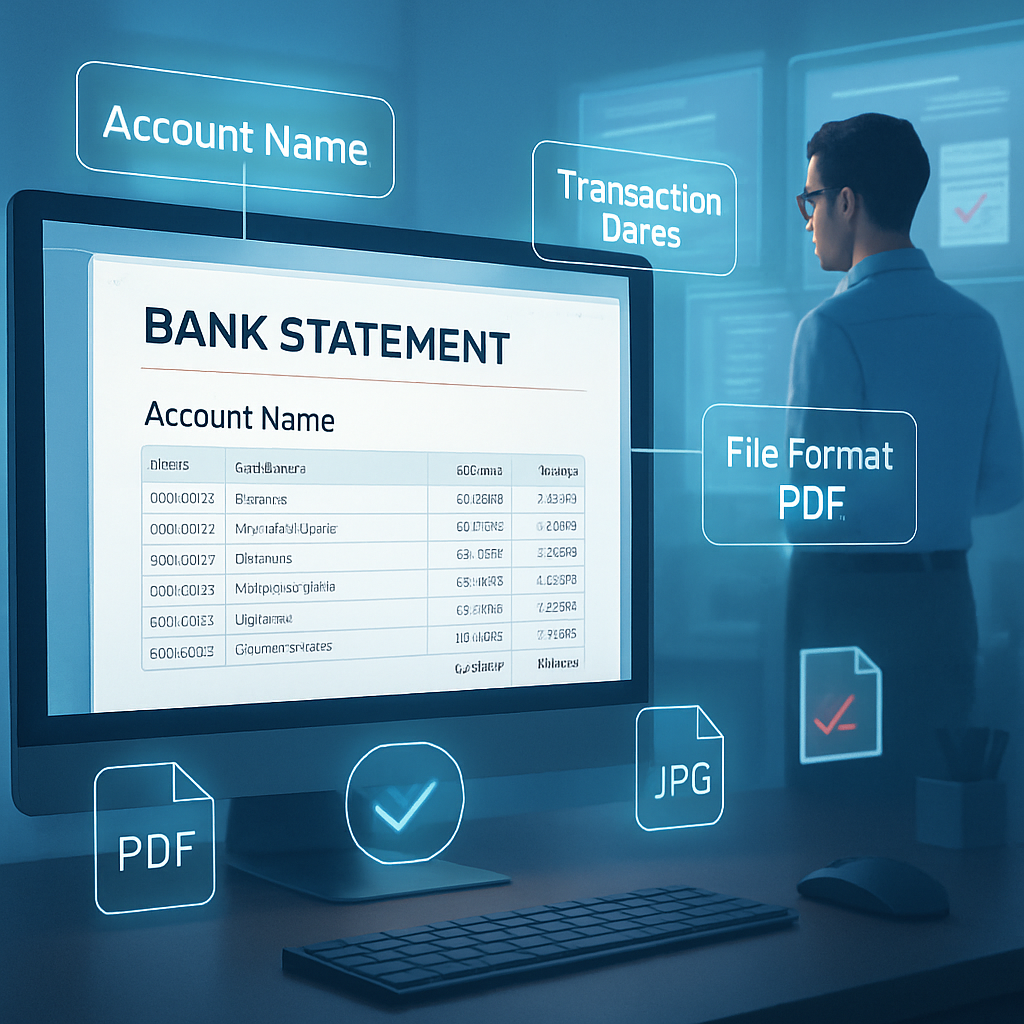
Wise requires bank statements in specific digital formats to process them efficiently. Accepted formats usually include PDF files and high-resolution image scans (such as JPG or PNG). Submitting unsupported file types like Word docs or low-quality images may result in slowdowns or rejections.
Insufficient or Missing Transaction Details
Verification mandates a clear and itemized transaction history that matches the account holder’s information. Statements missing dates, amounts, or descriptions create inconsistencies that trigger manual review, extending processing times.
Unclear or Illegible Statement Presentation
Low-resolution scans, cropped edges, added watermarks, or signs of document editing can cause hesitancy during review. Wise’s verification team prioritizes original, unaltered documents with crisp text and consistent formatting to accelerate acceptance.
Addressing these common delay factors begins with understanding the ideal bank statement format and presentation standards for Wise.
Essential Bank Statement Format and Presentation Tips for Wise
Key Information Your Bank Statement Must Include
- Account holder full name matching your Wise profile: Ensures that the statement links unequivocally to the profile being verified.
- Complete and itemized transaction history: Provides context and legitimacy to the financial activity displayed.
- Clear statement dates covering required verification period: Confirms the document is current and relevant for verification timing.
Accepted File Types and Formatting Standards
To comply with Wise’s requirements, submit bank statements as PDF files generated directly from your bank’s website or as high-quality scans (minimum 300 DPI) saved in lossless formats. PDFs are preferred for their fixed layout and consistent display across devices.
How to Ensure Statement Clarity and Consistency
Scan or download bank statements without cropping or compression. Maintain a neutral background and avoid alterations like redactions or added stamps that might be misinterpreted as tampering. Consistent font styles and sizes throughout the document simplify machine and human review.
Leveraging high-quality templates can assist in maintaining these formatting standards effortlessly. For instance, consider the USA Wise Bank Statement Templates designed to align with optimal clarity and data organization.
Proper format and presentation reduce rejection risks—should issues arise, knowing how to efficiently address rejections accelerates the re-verification process, which we’ll cover next.
Resolving Document Rejection Issues Efficiently
Common Feedback Received from Wise on Rejected Bank Statements
Typical rejection reasons include mismatched names, missing transaction periods, unclear scan quality, and inconsistencies between statement data and Wise account information. Wise’s feedback typically highlights these discrepancies to guide corrections.
Steps to Correct and Resubmit Your Bank Statement
- Review feedback in detail: Pinpoint exact causes flagged by Wise’s verification team.
- Obtain and format statements to address all noted issues: Download fresh statements directly from your bank’s portal or rescan originals at higher resolution if required.
- Resubmit promptly with high-quality documents: Upload corrected files using accepted formats, ensuring the entire document is legible and unaltered.
Using appropriately designed templates can simplify this remediation process, for example, through the UK Wise Bank Statement Templates, which emphasize adherence to formatting norms minimizing rejection factors.
Once your documents are corrected and re-submitted appropriately, accelerating acceptance is possible by optimizing the submission itself.
Optimizing Bank Statement Submission to Accelerate Verification
How to Prepare Clear, Legible Scans or PDFs for Submission
Ensure scans or PDFs are generated with high resolution (300 DPI or better), clean backgrounds, and include the entire statement without missing pages. When downloading PDFs directly from your online banking, avoid printing to PDF as it may reduce quality; instead, use the bank’s export or download feature.
Avoiding Common Submission Mistakes That Cause Delays
Partial uploads, file corruption, or unsupported formats frequently delay verification. Verify the file size and format before submitting. Keep file names simple and descriptive (e.g., “Wise_BankStatement_2024_March.pdf”) and avoid password-protected files. Multiple uploads of the same document in different formats should be avoided as this may confuse the verification system.
For easy access to templates that help maintain submission quality and formatting standards, visit Versatile Bank Statement Templates in Word & PDF.
Before finalizing submission strategy, remember that templates can be powerful tools but must be used ethically.
Legal & Ethical Use of Bank Statement Templates
- Use bank statement templates strictly for educational, mockup, or presentation purposes, such as demonstrating document design or financial workflows.
- Avoid submitting altered or fraudulent bank statements to any institution, including Wise, to remain compliant with legal and platform rules.
- Always comply with local laws, financial regulations, and Wise’s terms to uphold integrity during any verification or related processes.
With ethical usage clear, a practical checklist can help ensure your bank statement submissions maximize their chances of smooth acceptance.
Checklist for Fast and Successful Wise Bank Statement Verification
- Ensure bank statements contain all required account and transaction details matching your Wise profile.
- Use accepted file formats like high-resolution PDFs or quality scans without compression artifacts.
- Confirm clarity and legibility of all statement pages with no alterations that might raise suspicion.
- Carefully review Wise’s feedback and resubmit corrected documents promptly and accurately.
- Maintain realistic expectations of processing timelines and monitor for timely follow-ups.
For reference and standardized formatting designs, explore templates like the India Bank Statement Templates that balance clarity, compliance, and ease of editing.
Conclusion
Successfully navigating Wise bank statement submissions hinges on understanding processing timelines, adhering to precise document formatting, and promptly addressing any feedback. Submitting well-structured, high-resolution PDFs or scans that clearly display all necessary account details significantly reduces the chance of delays and rejections. Utilizing professionally designed templates tailored for Wise verification streamlines preparation and ensures consistency across submissions.
Recognizing common pitfalls—such as unsupported file types, incomplete transaction histories, or altered documents—empowers users to proactively prevent setbacks and maintain smooth workflows. This approach not only saves valuable time but also enhances clarity and professionalism in financial document handling.
To optimize future document submissions, challenge yourself to integrate reusable, locale-appropriate templates with meticulous attention to detail on every statement. By doing so, you fortify the overall quality and efficiency of your verification process, setting a new standard for precise and timely financial document management.